Wednesday, 27 April 2011

365 Days Winter In Sierra Nevada


The snow was so slippery but pretty rough enough for me to balance myself with just my piece of sneakers that was newly bought in Bullring, Birmingham. Though it wasn't meant for snow surface, but indeed i could control my steps though...it was really fun and enjoyable...I had chance to play sludge but unfortunately the picture that I took was gone since my niece's laptop was stolen...how sad yeah...not only that, my new Nikon camera was accidentally fell down by my nephew...it crushed and broke the lense...my goodness...one thing happened after another...but its ok...at least I managed to save a few pictures from my sister's blackberry torch...


Posing happily on the purely white snow...it was damned cold and I almost had frost bite since I didn't bring my gloves...I left them in the car...but its fine with me and I can adapt myself without any proper snow attires...there were few wild eyes stared at us with an odd and smug face wondering what kind of people playing snow with an ordinary winter outfits?


See everyone...I still can make a sweet post with a peace signs...hehehe...and that shows how much I looooove the snow...Can you believe it? Here in Sierra Nevada, the snow won't melt though the weather at the bottom is around 18 to 20 degrees...its having winter for 365 days...Just imagine that you can play with the snow throughout the year...Isn't that splendid?

All about Dynamic Views for Readers

All about Dynamic Views for Readers

Tuesday, 26 April 2011

Travel To Spain 13: Almeria

File:San Cristóbal detrás Almería noche.JPG

Statue Of San Cristobal


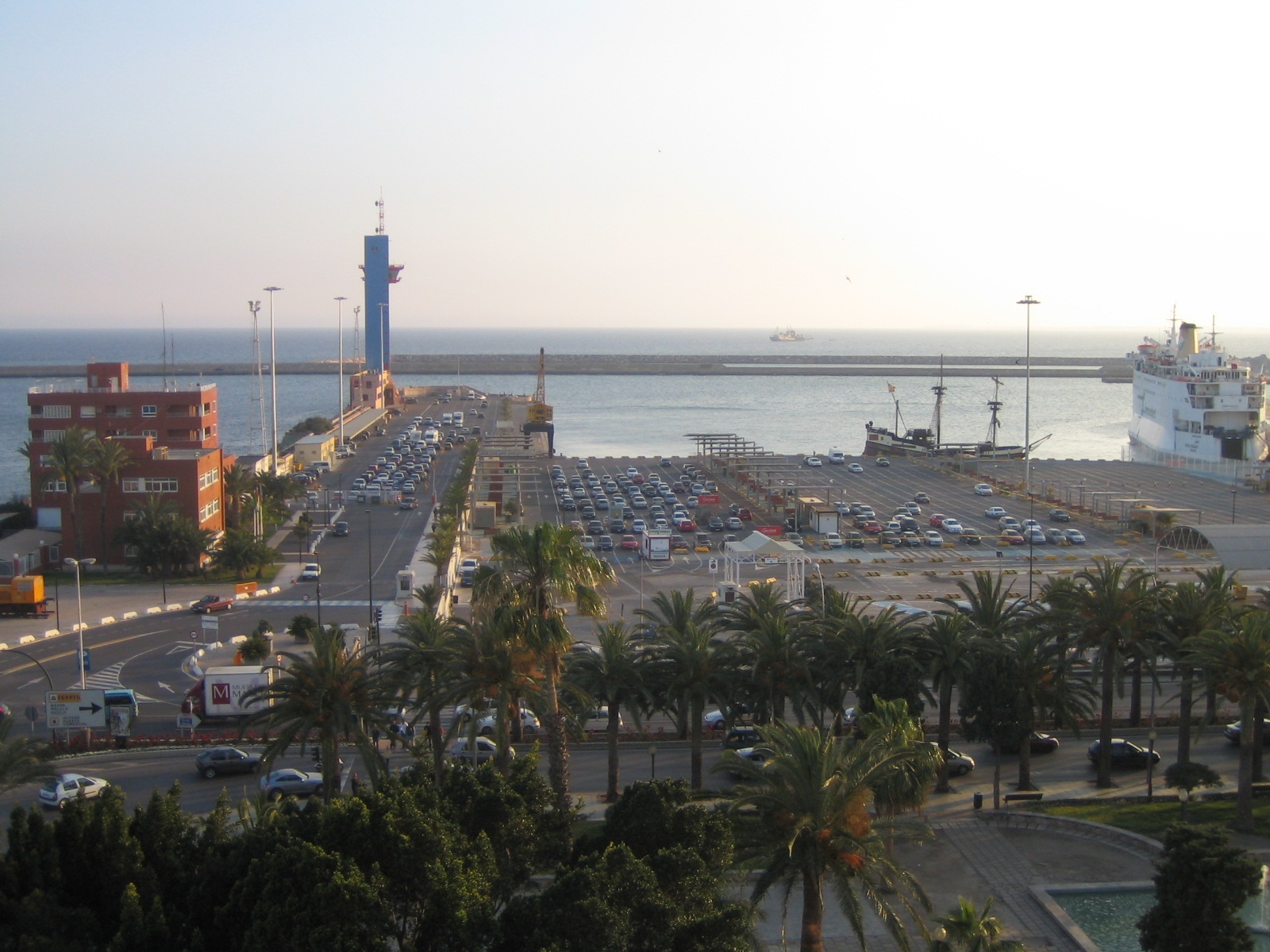
                                                                                   Harbour Of Almeria


File:Panorámica de Almería.jpg
                                                             Panaromica de Almeria


Almería is a city in southeastern Spain, on the Mediterranean Sea. It is the capital of the province of the same name.

The city was founded by Calipha Abd ar-Rahman III of Cordova in 955 AD. It was to be a principal harbour in his extensive domain to strengthen his Mediterranean defences.
Its Moorish castle, Alcazaba, is the second largest among the Muslim fortresses of Andalusia, after the Alhambra.

In this period, the port city of Almería reached its historical peak. After the fragmentation of the Caliphate of Cordova, Almeria continued under powerful local Muslim Taifa emirs like Jairan, the first independent Emir of Almería, Cartagena, and Almotacin, the poet emir. Both Cartagena and Almotacin were fearless warriors, but also patrons of the arts. A silk industry, based upon plantings of mulberry trees in the hot, dry landscape of the province, supported Almería in the 11th century and made its strategic harbour an even more valuable asset. Contested by the emirs of Granada and Valencia, Almería experienced many sieges, including one especially fierce siege when Christians, called to the Second Crusade by Pope Eugene III, were also encouraged to attack the Muslim 'infidels' on a more familiar coast.
On that occasion Alfonso VII, at the head of mixed forces of Catalans, Genoese, Pisans and Franks, led a crusade against the rich city, and Almería was occupied in October 1147. Within a decade it had passed to the control of the puritanical Almoravid emirs,and not until the late 15th century did it fall permanently into Christian hands. The city surrendered to the Catholic Monarchs, Ferdinand and Isabella, on December 26, 1489.

Travel To Spain12: Cordoba

File:Salon Rico 1.jpg

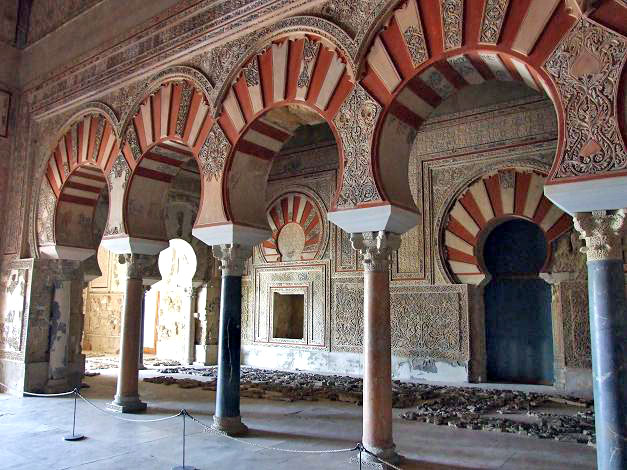
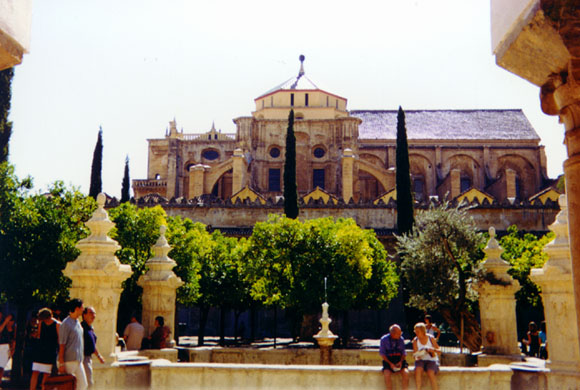
Mezquita Cordoba


Córdoba (also Cordova) is a city in Andalusia, southern Spain, and the capital of the province of Córdoba. An Iberian and Roman city in ancient times. Also in the Middle Ages it was capital of an Islamic caliphate.

The old town contains many impressive architectural reminders of when Corduba, the capital of Hispania Ulterior during the Roman Republic and capital of Hispania Baetica during the Roman Empire; and Qurṭuba (قرطبة) the capital of the Caliphate of Córdoba, governed almost all of the Iberian peninsula.

It has been estimated that in the 10th century and beginning of the 11th century, Córdoba was the most populous city in the world, and during these centuries became the intellectual center of Europe. Today it is a moderately-sized modern city; its population in 2008 was 325,453.


Travel To Spain 11: Gibraltar

File:Abdulaziz Mosque Gibraltar.jpg

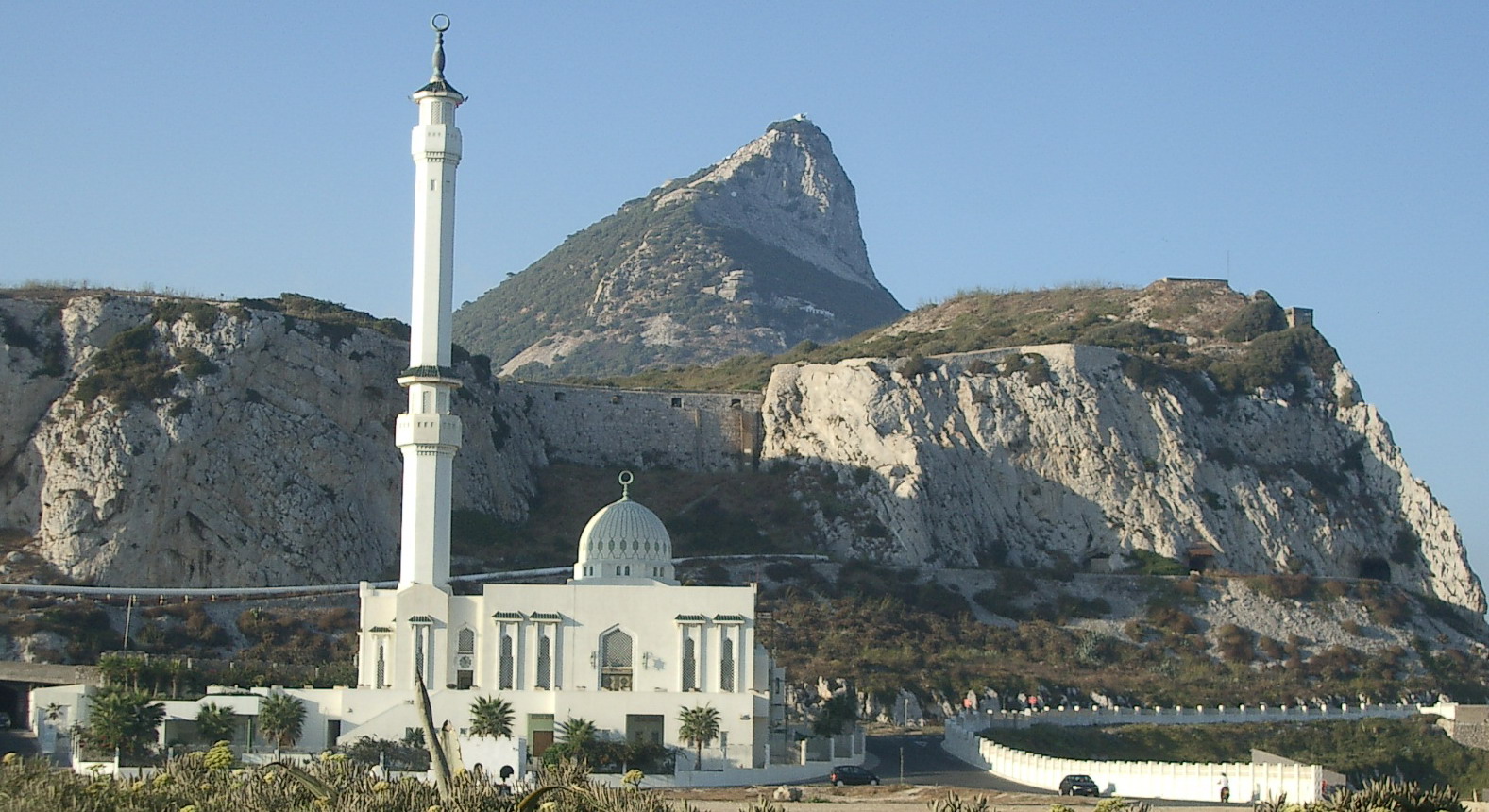
Abdul Aziz Mosque


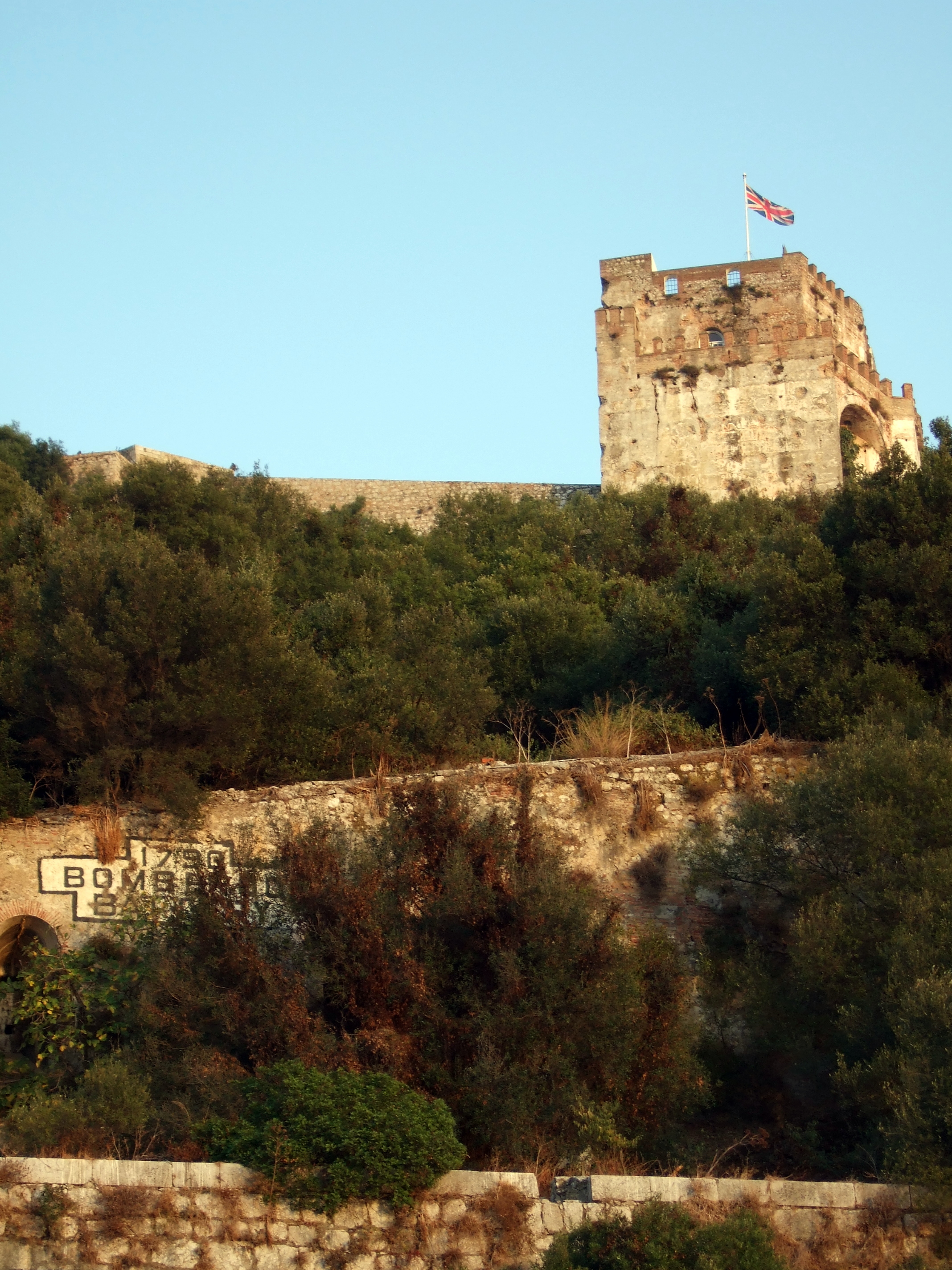
File:The Moorish Castle.jpg
The Moorish Castle


File:Barbary macaque and tourists.jpg

Barbary Macaque (Local Monkey)


File:Rock of Gibraltar northwest.jpg
Rock Of Gibraltar

The name Gibraltar is the Spanish derivation of the Arabic name Jabal Tāriq (جبل طارق), meaning "mountain of Tariq". It refers to the geological formation, the Rock of Gibraltar, which in turn was named after the Berber Umayyad general Tariq ibn-Ziyad who led the initial incursion into Iberia in advance of the main Moorish force in 711 under the command of Umayyad Caliph Al-Walid I. Earlier, it was known as Mons Calpe, one of the Pillars of Hercules. Today, Gibraltar is colloquially referred to as Gib or The Rock.

Evidence of Neanderthal habitation in Gibraltar between 128,000 and 24,000 BCE has been discovered at Gorham's Cave, making Gibraltar the last known holdout of the Neanderthals. Within recorded history, the first inhabitants were the Phoenicians, around 950 BCE. Subsequently, Gibraltar became known as one of the Pillars of Hercules, after the Greek legend of the creation of the Strait of Gibraltar by Heracles. The Carthaginians and Romans also established semi-permanent settlements. After the collapse of the Roman Empire, Gibraltar came briefly under the control of the Vandals. The area later formed part of the Visigothic Kingdom of Hispania until the Islamic conquest of Iberia in 711 CE. Seven centuries of Moorish control ended when Gibraltar was recaptured by the Duke of Medina Sidonia in 1462 as part of the Spanish Reconquista.

After the conquest, King Henry IV assumed the title of King of Gibraltar, establishing it as part of the municipal area of the Campo Llano de Gibraltar. Six years later Gibraltar was restored to the Duke of Medina Sidonia who sold it in 1474 to a group of Jewish conversos from Córdoba and Seville in exchange for maintaining the garrison of the town for two years, after which time the 4,350 Jews were expelled by the Duke as part of the Inquisition. In 1501 Gibraltar passed back to the hands of the Spanish Crown and Isabella I of Castile issued a Royal Warrant granting Gibraltar the coat of arms that it still uses today.


Travel To Spain 10: Marbella

Travel To Spain 9 : Zaragoza

File:View from top of El Pilar.jpg

El Pilar


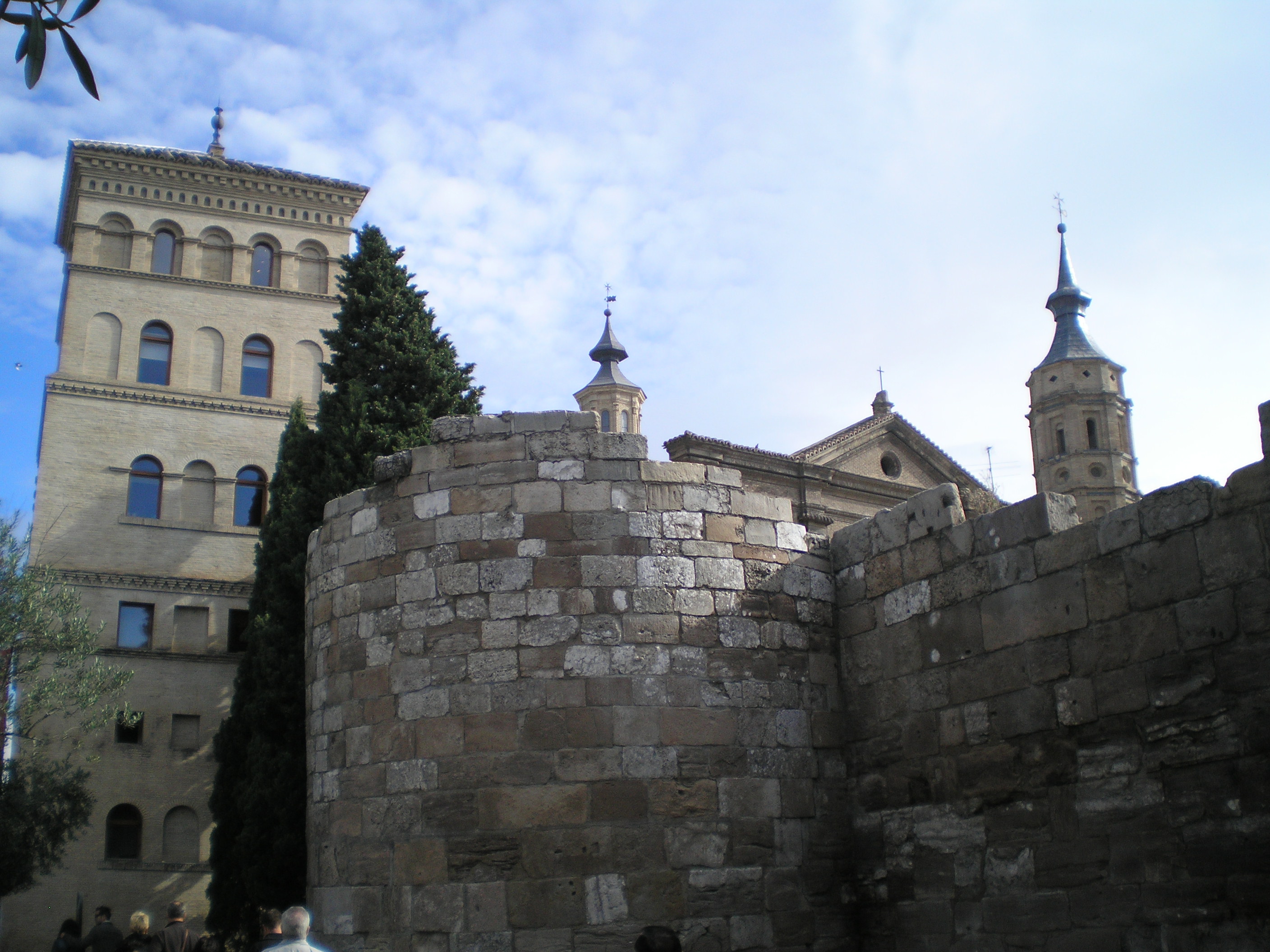
File:Torreón de la Zuda-Muralla.jpg

Roman Walls

File:Basílica del Pilar, Zaragoza, Aragón.jpg

Basilica del Pilar

Zaragoza also called Saragossa in English, is the capital city of the Zaragoza Province and of the autonomous community of Aragon, Spain. It is situated on the Ebro river and its tributaries, the Huerva and Gállego, near the centre of the region, in a valley with a variety of landscapes, ranging from desert (Los Monegros) to thick forest, meadows and mountains.

The population of the city of Zaragoza in 1 September 2010 was 701,090, ranking fifth in Spain. The population of the metropolitan area was estimated in 2006 at 783,763 inhabitants. The municipality is home to more than 50 percent of the Aragonese population. The city lies at an altitude of 199 metres.

Zaragoza hosted Expo 2008 in the summer of 2008, a World's fair on water and sustainable development. It will host another fair in 2014, the upcoming "Flowers Expo", and it is a candidate to be European Capital of Culture in 2016. Zaragoza wants to be a candidate city for the Winter Olympic Games 2022, the project is similar to Torino 2006 and Vancouver 2010. Ice and snow sports in Zaragoza, are popular in the nearby Pyrenees, where many of Spain's best ski resorts are located.

The city is famous for its folklore, a renowned local gastronomy, and landmarks such as the Basílica del Pilar, La Seo Cathedral and the The Aljafería Palace. Together with La Seo and the Aljaferia, several other buildings form part of the Mudéjar Architecture of Aragon which is a UNESCO World Heritage Site. The Fiestas del Pilar are among the most celebrated festivals in Spain.

Travel to Spain 7: Toledo

File:Puertadelsol toledo.jpg

Puerta del Sol


File:Toledo Puerta Bisagra 1.jpg

Toledo Puerta Bisagra


File:Toledo Puente Alcantara.jpg

Alcantara Bridge

Toledo (Arabic طليطلة Ṭulayṭulah) is a municipality located in central Spain, 70 km south of Madrid. It is the capital of the province of Toledo. It is also the capital of autonomous community of Castile-La Mancha. It was declared a World Heritage Site by UNESCO in 1986 for its extensive cultural and monumental heritage as one of the former capitals of the Spanish Empire and place of coexistence of Christian, Jewish and Muslim cultures, as well as the place where harsh religious persecutions were held against the Jews. Many famous people and artists were born or lived in Toledo, including Al-Zarqali, Garcilaso de la Vega, Eleanor of Toledo, Alfonso X and El Greco. It was also the place of important historic events such as the Visigothic Councils of Toledo. As of 2009, the city has a population of 82,291 and an area of 232.1 km2 (89.59 square miles).

Travel To Spain 8 : Benidorm, Worst Nightmare City

File:Benidorm uitzicht vanaf het kruis.jpg

Coastal beach of Benidorm
File:Sierrahelada.jpg

Benidorm view from the Mountain in Sierra Helada


Hotel Marconi, Benidorm, Spain 

Hotel Marconi Benidorm
In Benidorm, there's nothing much to share though it has a beautiful beach with a majestic panaromic view. Nevertheless, the so called Hotel Marconi Benidorm was just like piece of s**t. I hereby strongly stated here that never go to this hotel ever especially when you are a muslim. The hotel's staff and management were just like a bunch of stupid creatures. They treated me and my family damned bad and threaten to call the police just because we are muslims. They were so damned racist, rude and bad menace. Among all 20 cities that I went throughout Spain, this is the worst ever hotel and people I've met. The service was very bad and poor.

They didn't even know how to treat their guests though we've paid. It comes to my mind that they are not highly educated people and never learn hotel and catering course. In fact, they didn't know how to practise or apply the hotel's etiquettes. Therefore, I suggest to whoever read my blog, please pay duly attention to what I had experienced before. I won't allow this bad nightmare to be happened to anyone's else.

Travel To Spain 6 : Cartagena

Cartagena is a Mediterranean city and naval station located in the Region of Murcia, southeastern Spain. As of 2009, it has a population of 211,996, making it the second largest city in the Region, the 6th among the non-province capitals of Spain, and the 24th overall.

Cartagena has been the capital of the Spanish Navy's Maritime Department of the Mediterranean since the arrival of the Spanish Bourbons in the 18th century. As far back as the 16th century it was one of the most important naval ports in Spain, together with Ferrol in the North. It is still an important naval seaport, the main military haven of Spain, and there is a big naval shipyard.

Cartagena was known as Qart Hadasht during the Phoenician conquest, Carthago Nova (the New Carthage) and Carthago Spartaria during the Roman era and Qartayannat al-Halfa during Islamic Spain. It was the first of a number of cities which eventually were called Cartagena.

Travel To Spain 5 : Alicante

File:Skyline de Alicante.JPG


Alicante Harbour With Castle Santa Barbara At The Back


File:SantaBarbara2.jpg

Mount Benacantil & Castle Of Santa Barbara


 Alicante or Alacant is a city in Spain, the capital of the Province of Alicante and of the comarca of Alacantí, in the south of the Valencian Community. It is also a historic Mediterranean port. The population of the city of Alicante proper was 334,418, estimated as of 2010, ranking as the second-largest Valencian city.

Travel To Spain 4 : Madrid


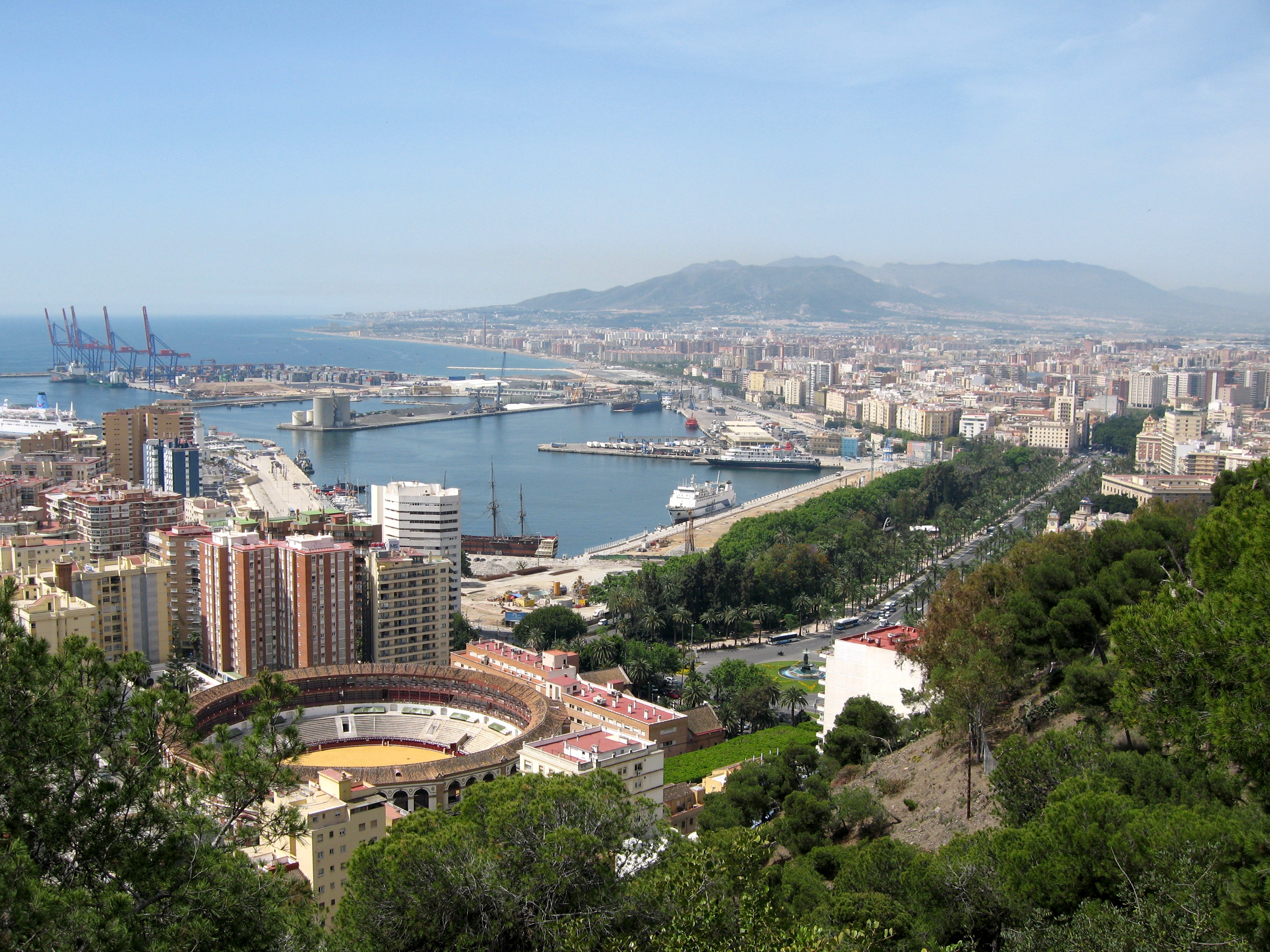
Travel To Spain 4: Malaga

                              
Castle Of Gibralfaro

The Moors left the dominating castle on mount Gibralfaro that is connected to the Alcazaba, the lower fortress and regal residence. Both constructions built during the Taifas period (11th century) and extended during the Nasrid period (13th and 14th centuries.). The Alcazaba stands on a hill within the city of Málaga. Originally, the Alcazaba defended the city from the incursions of pirates. Later, in the mid-11th century, it was completely rebuilt by the Hammudid dynasty. Occupying the eastern hillside that rises from the sea and overlooks the city, the Alcazaba was surrounded by palms and pine trees.

Like many of the military fortifications that were constructed in Islamic Spain, the Alcazaba of Málaga featured a quadrangular plan. It was protected by an outer and inner wall, both supported by rectangular towers, between which a covered walkway led up the slope to the Gibralfaro. (This was the only exchange between the two sites.) Due to its rough and awkward hillside topography, corridors throughout the site provided a means of communications for administrative and defensive operations, also affording privacy to the palatial residential quarters. The entrance of the complex featured a grand tower that led into a sophisticated double bent entrance. After passing through several gates, open yards with beautiful gardens of pine and eucalyptus trees, and the inner wall through the Puerta de Granada, are the 11th and 14th century governor's palace.

It was organized around a central rectangular courtyard with a triple-arched gateway and some of the rooms have been preserved to this day. An open 11th century mirador (belvedere), to the south of this area, affords views of the gardens and sea below. Measuring 2.5 square meters, this small structure highlighted scalloped, five-lobed arches. To the north of this area were a waterwheel and Cyclopean well, (penetrating forty meters below ground) a hammam, workshops and the monumental Puerta de la Torre del Homenaje, the northernmost point of the inner walls. Directly beyond was the passage to the Gibralfaro above.


Travel To Spain 3 : Granada


Sierra Nevada

The Sierra Nevada (meaning "snowy range" in Spanish) is a mountain range in the region of provinces of Granada and Almería in Spain. It contains the highest point of continental Spain, Mulhacén at 3478 m (11,411 ft.) above sea level.

It is a popular tourist destination, as its high peaks make skiing possible in one of Europe's most southerly ski resorts, in an area along the Mediterranean Sea predominantly known for its warm temperatures and abundant sunshine. At its foothills is found the city of Granada and, a little further, Almería and Málaga.

Parts of the range have been included in the Sierra Nevada National Park. The range has also been declared a biosphere reserve. The Sierra Nevada Observatory is located on the northern slopes at an elevation of 2800 m (9186 ft.).


Alhambra

The Alhambra Palace must be seen when you travel to Granada. Its building has evolved over time with many new developments. The area of the Alhambra Palace contains the Alcazaba (the military fortress), the Palacios Nazaries (the Nasrid royal palaces), the Generalife Gardens (stunning gardens, fountains and patios where the Moors built their summer palaces) and the Medina (the town area where the workshops of craftsmen, houses and baths could be found).


Travel To Spain 2 : Barcelona

File:Parcguell.jpg

File:Park Güell 02.jpg

Park Guell

The park was originally part of a commercially unsuccessful housing site, the idea of Count Eusebi Güell, whom the park was named after. It was inspired by the English garden city movement; hence the original English name Park (in the Catalan language spoken in Catalonia where Barcelona is located, the word for "Park" is "Parc", and the name of the place is "Parc Güell" in its original language). The site was a rocky hill with little vegetation and few trees, called Muntanya Pelada (Bare Mountain).

It already included a large country house called Larrard House or Muntaner de Dalt House, and was next to a neighborhood of upper class houses called La Salut (The Health). The intention was to exploit the fresh air (well away from smoky factories) and beautiful views from the site, with sixty triangular lots being provided for luxury houses. Count Eusebi Güell added to the prestige of the development by moving in 1906 to live in Larrard House. Ultimately, only two houses were built, neither designed by Gaudí.
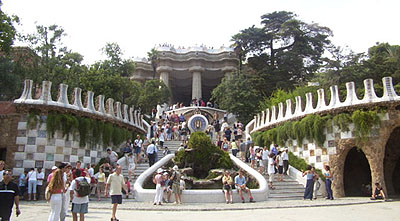
One was intended to be a show house, but on being completed in 1904 was put up for sale, and as no buyers came forward, Gaudí, at Güell's suggestion, bought it with his savings and moved in with his family and his father in 1906. This house, where Gaudi lived from 1906 to 1926, was built by Francesc Berenguer in 1904. It contains original works by Gaudi and several of his collaborators. It is now the Gaudí Museum (Casa Museu Gaudí) since 1963. In 1969 it was declared a historical artistic monument of national interest.


Travel To Spain


Casa Mila

Casa Milà, better known as La Pedrera (Catalan for 'The Quarry'), is a building designed by the Catalan architect Antoni Gaudí and built during the years 1905–1910, being considered officially completed in 1912. It is located at 92, Passeig de Gràcia (passeig is Catalan for promenade) in the Eixample district of Barcelona, Catalonia, Spain.

It was built for the married couple, Rosario Segimon and Pere Milà. Rosario Segimon was the wealthy widow of José Guardiola, an Indiano, a term applied locally to the Catalans returning from the American colonies with tremendous wealth. Her second husband, Pere Milà, was a developer who was criticized for his flamboyant lifestyle and ridiculed by the contemporary residents of Barcelona, when they joked about his love of money and opulence, wondering if he was not rather more interested in "the widow’s guardiola" (piggy bank), than in "Guardiola’s widow".

Gaudi, a Catholic and a devotee of the Virgin Mary, planned for the Casa Milà to be a spiritual symbol. Overt religious elements include an excerpt from the Rosary prayer on the cornice and planned statues of Mary, specifically Our Lady of the Rosary, and two archangels, St. Michael and St. Gabriel. The design by Gaudi was not followed in some aspects. The local government objected to some aspects of the project, fined the owners for many infractions of building codes, ordered the demolition of aspects exceeding the height standard for the city.

Casa Batlló is a building restored by Antoni Gaudí and Josep Maria Jujol, built in the year 1877 and remodelled in the years 1904–1906; located at 43, part of the Illa de la Discòrdia (the "Block of Discord") in the Eixample district of Barcelona, Spain. Gaudí's assistants Domènec Sugrañes i Gras , Josep Canaleta y Joan Rubió also contributed to the renovation project.

The local name for the building is Casa dels ossos (House of Bones), and indeed it does have a visceral, skeletal organic quality. It was originally designed for a middle-class family and situated in a prosperous district of Barcelona.

The building looks very remarkable — like everything Gaudí designed, only identifiable as Modernisme or Art Nouveau in the broadest sense. The ground floor, in particular, is rather astonishing with tracery, irregular oval windows and flowing sculpted stone work.

It seems that the goal of the designer was to avoid straight lines completely. Much of the façade is decorated with a mosaic made of broken ceramic tiles  that starts in shades of golden orange moving into greenish blues. The roof is arched and was likened to the back of a dragon or dinosaur. A common theory about the building is that the rounded feature to the left of centre, terminating at the top in a turret and cross, represents the lance of Saint George (patron saint of Catalonia, Gaudi's home), which has been plunged into the back of the dragon.