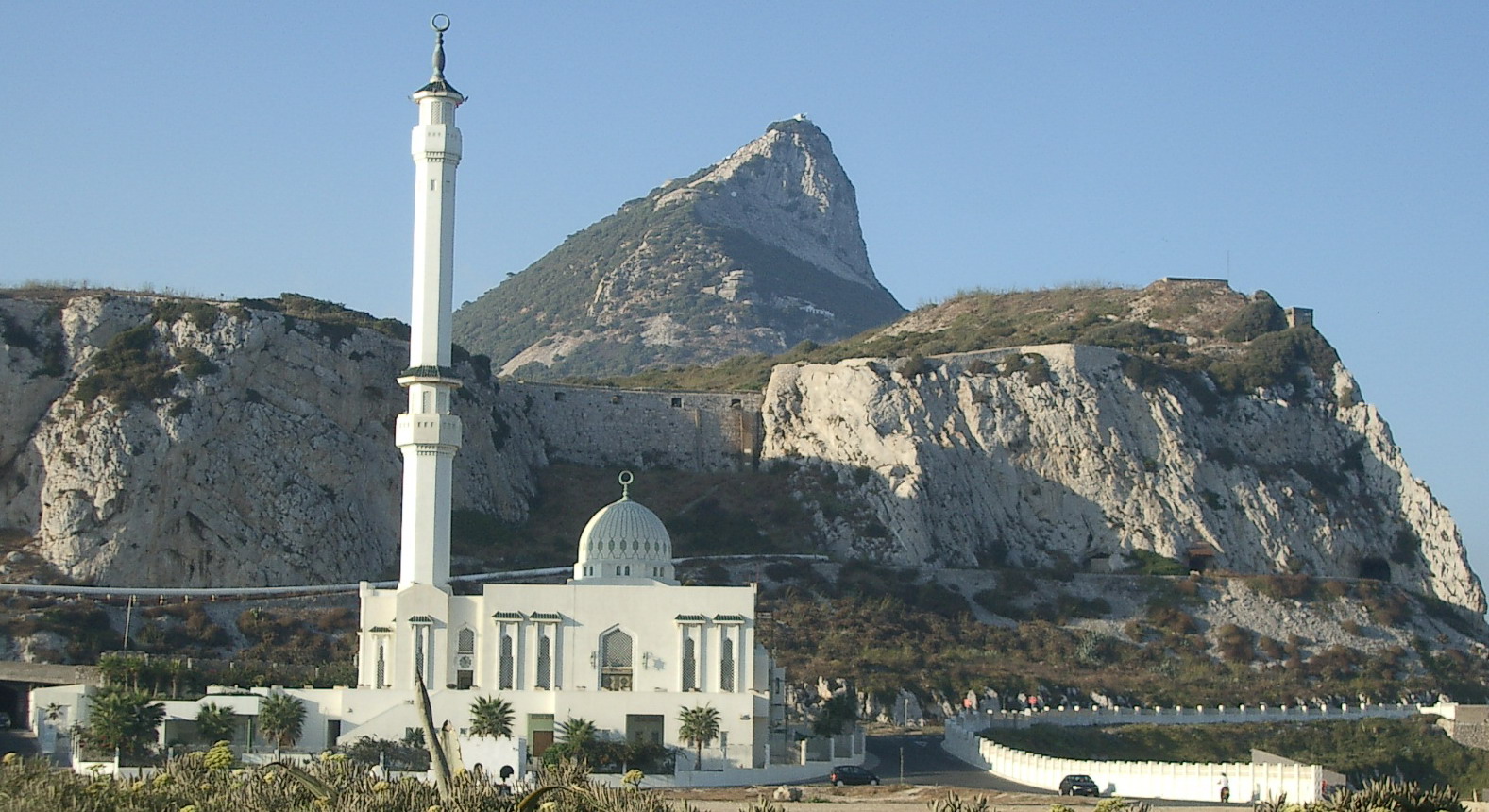
Abdul Aziz Mosque
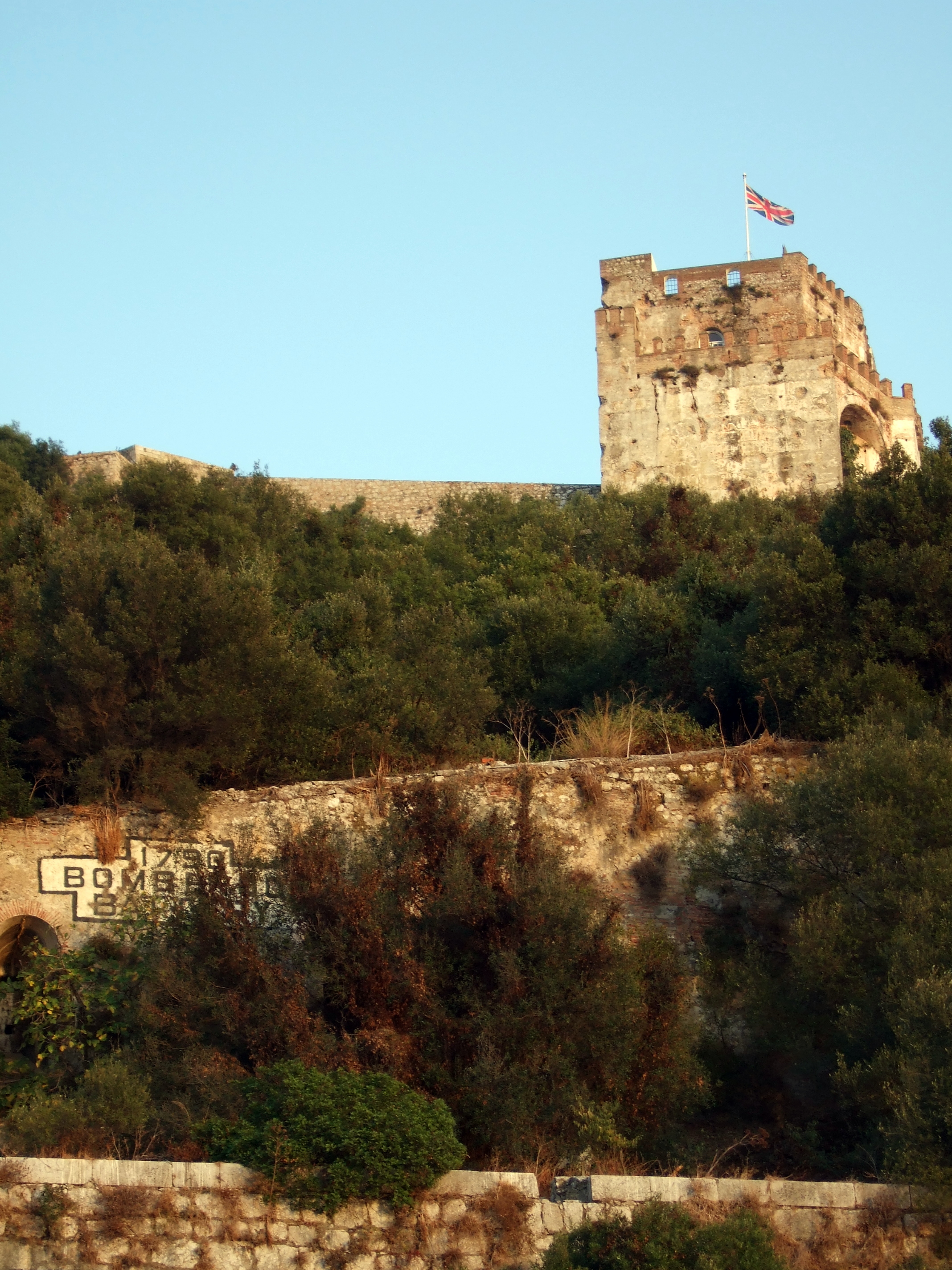
The Moorish Castle

Barbary Macaque (Local Monkey)

Rock Of Gibraltar
The name Gibraltar is the Spanish derivation of the Arabic name Jabal Tāriq (جبل طارق), meaning "mountain of Tariq". It refers to the geological formation, the Rock of Gibraltar, which in turn was named after the Berber Umayyad general Tariq ibn-Ziyad who led the initial incursion into Iberia in advance of the main Moorish force in 711 under the command of Umayyad Caliph Al-Walid I. Earlier, it was known as Mons Calpe, one of the Pillars of Hercules. Today, Gibraltar is colloquially referred to as Gib or The Rock.
Evidence of Neanderthal habitation in Gibraltar between 128,000 and 24,000 BCE has been discovered at Gorham's Cave, making Gibraltar the last known holdout of the Neanderthals. Within recorded history, the first inhabitants were the Phoenicians, around 950 BCE. Subsequently, Gibraltar became known as one of the Pillars of Hercules, after the Greek legend of the creation of the Strait of Gibraltar by Heracles. The Carthaginians and Romans also established semi-permanent settlements. After the collapse of the Roman Empire, Gibraltar came briefly under the control of the Vandals. The area later formed part of the Visigothic Kingdom of Hispania until the Islamic conquest of Iberia in 711 CE. Seven centuries of Moorish control ended when Gibraltar was recaptured by the Duke of Medina Sidonia in 1462 as part of the Spanish Reconquista.
After the conquest, King Henry IV assumed the title of King of Gibraltar, establishing it as part of the municipal area of the Campo Llano de Gibraltar. Six years later Gibraltar was restored to the Duke of Medina Sidonia who sold it in 1474 to a group of Jewish conversos from Córdoba and Seville in exchange for maintaining the garrison of the town for two years, after which time the 4,350 Jews were expelled by the Duke as part of the Inquisition. In 1501 Gibraltar passed back to the hands of the Spanish Crown and Isabella I of Castile issued a Royal Warrant granting Gibraltar the coat of arms that it still uses today.


No comments:
Post a Comment