Tuesday, 3 May 2011

Lisbon, Portugal : Tale Of The Moorish City

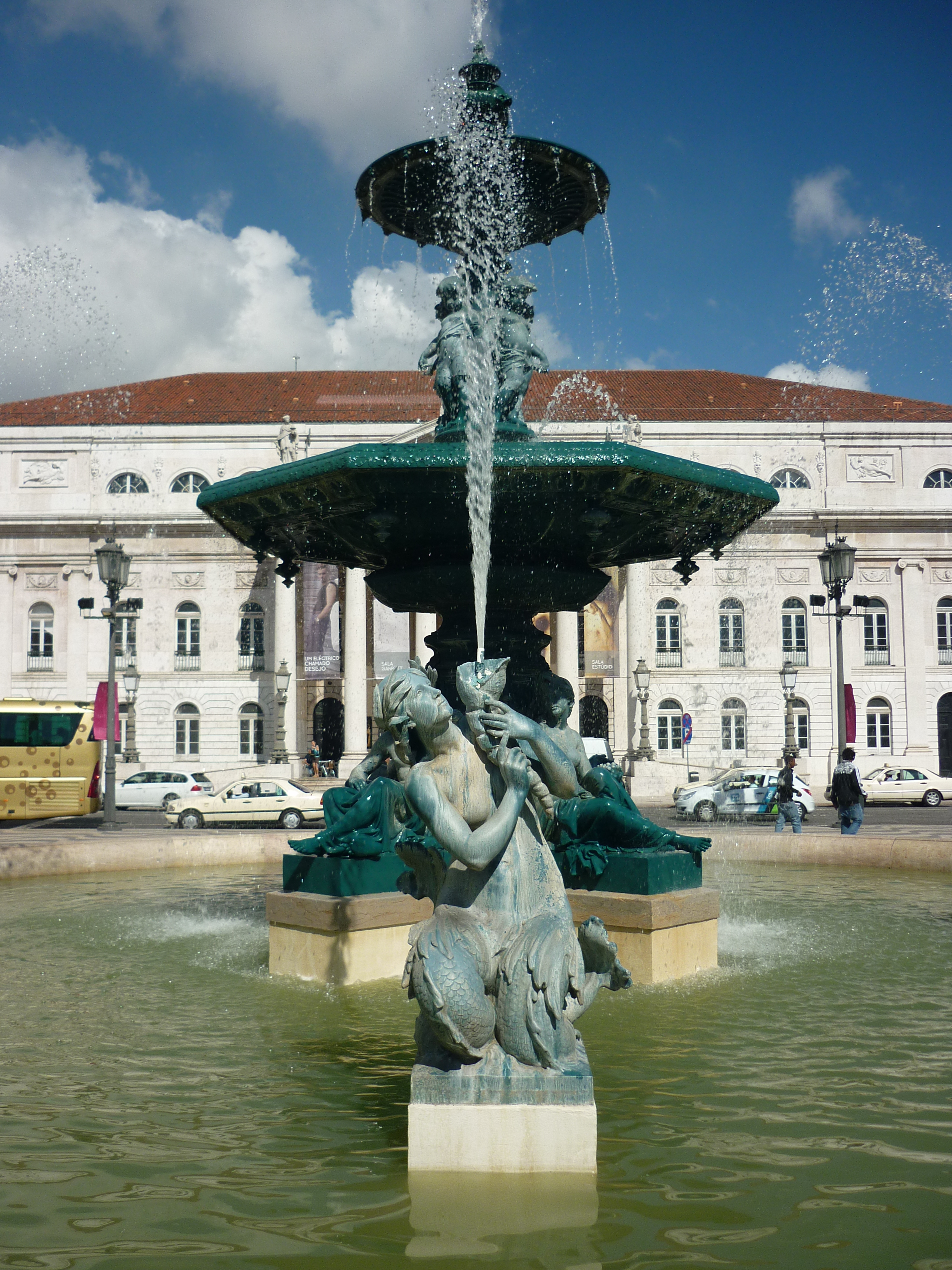
File:Fountain in Don Pedro IV square, Lisbon.jpg

Fountain In Don Pedro IV Square


File:ArcoDoTriunfoLisboa1.JPG
Rua Augusta Arch

Farol da Guia

Farol da Guia Light House , Lisbon

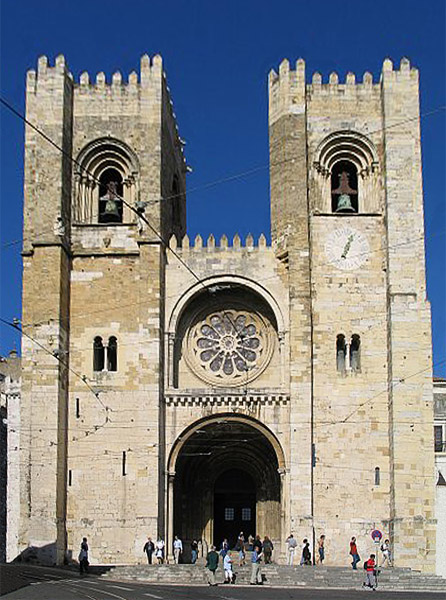
File:Se de Lisboa Frente.JPG
Se De Lisboa Frente

The Moorish influence is still present in Alfama, the old part of Lisbon that survived the 1755 Lisbon earthquake. Many placenames are derived from Arabic; the Alfama, the oldest existing district of Lisbon, for example, is derived from the Arabic "al-hamma".
For a brief time during the Taifa period, Lisbon was the centre town in the Regulo Eslavo of the Taifa of Badajoz, and then as an independent Taifa ruled by Abd al-Aziz ibn Sabur and Abd al-Malik ibn Sabur sons of Sabur al-Jatib (Sabur the Slav), a Slav that had been at the service of al-Hakam II before ruling the Taifa of Badajoz.
In 1147, as part of the Reconquista, crusader knights led by Afonso I of Portugal, besieged and reconquered Lisbon. The city, with around 154,000 residents at the time, returned to Christian rule.The reconquest of Portugal and re-establishment of Christianity is one of the most significant events in Lisbon's history; although it is known through the chronicle Expugnatione Lyxbonensi, attributed to Osburnus, that there was a bishop in the town that was killed by the crusaders and that the population was praying to the Virgin Mary when afflicted with plague, which indicates that the Mozarab population followed the Mozarabic rite.
Arabic lost its place in everyday life. Any remaining Muslim population were converted to Roman Catholicism by force, or expelled, and the mosques were turned into churches.


Faro, Portugal ; A must visit place

File:MarinaFaro.JPG
Faro is a city in the Faro Municipality in southern Portugal. It is the seat of the Faro District and capital of the Algarve region. The Algarve and Faro district cover the same territory.
With the advent of Moorish rule in the 8th century, Ossonoba retained its status as the most important town in the southwest corner of the Iberian Peninsula. In the 9th century, it became the capital of a short-lived princedom and was fortified with a ring of defensive walls. At this time, the name Santa Maria began to be used instead of Ossonoba.
Later on, the town was known as Harun (from a local Muslim chieftain), hence its current name, Faro. During the 500 years of Moorish rule there were some Jewish inhabitants in Faro who wrote copies of the Old Testament. One of Faro's historical names in Arabic is أخشونبة. The Moors were defeated by the forces of the Portuguese King Afonso III in 1249. With the decline of the importance of the city of Silves, Faro took over the role of administration of the Algarve area.
The Earl of Essex sacked the town in 1596 and seized the library of the Bishop of Faro. These books were later donated to the University of Oxford, becoming part of the Bodleian Library.


I love Albufeira, Portugal


Albufeira Portugal

ALBUFEIRA tops the list of package-tour destinations in the Algarve. The old centre remains an unusually pretty village, with narrow, twisting lanes of whitewashed houses crisscrossing the high ochre-red cliffs above a beautiful spread of beaches. But beyond, hundreds of apartment buildings lie strung across the hillsides that spread east and west, around the town's marina. If you're looking for unspoiled Portugal, this isn't it. Nevertheless, Albufeira is undeniably a fun resort, attracting a varied mix of holidaymakers, notably a well-heeled clientele that frequents the more expensive restaurants, and a younger contingent who devote themselves to consuming as much alcohol as is humanly possible.