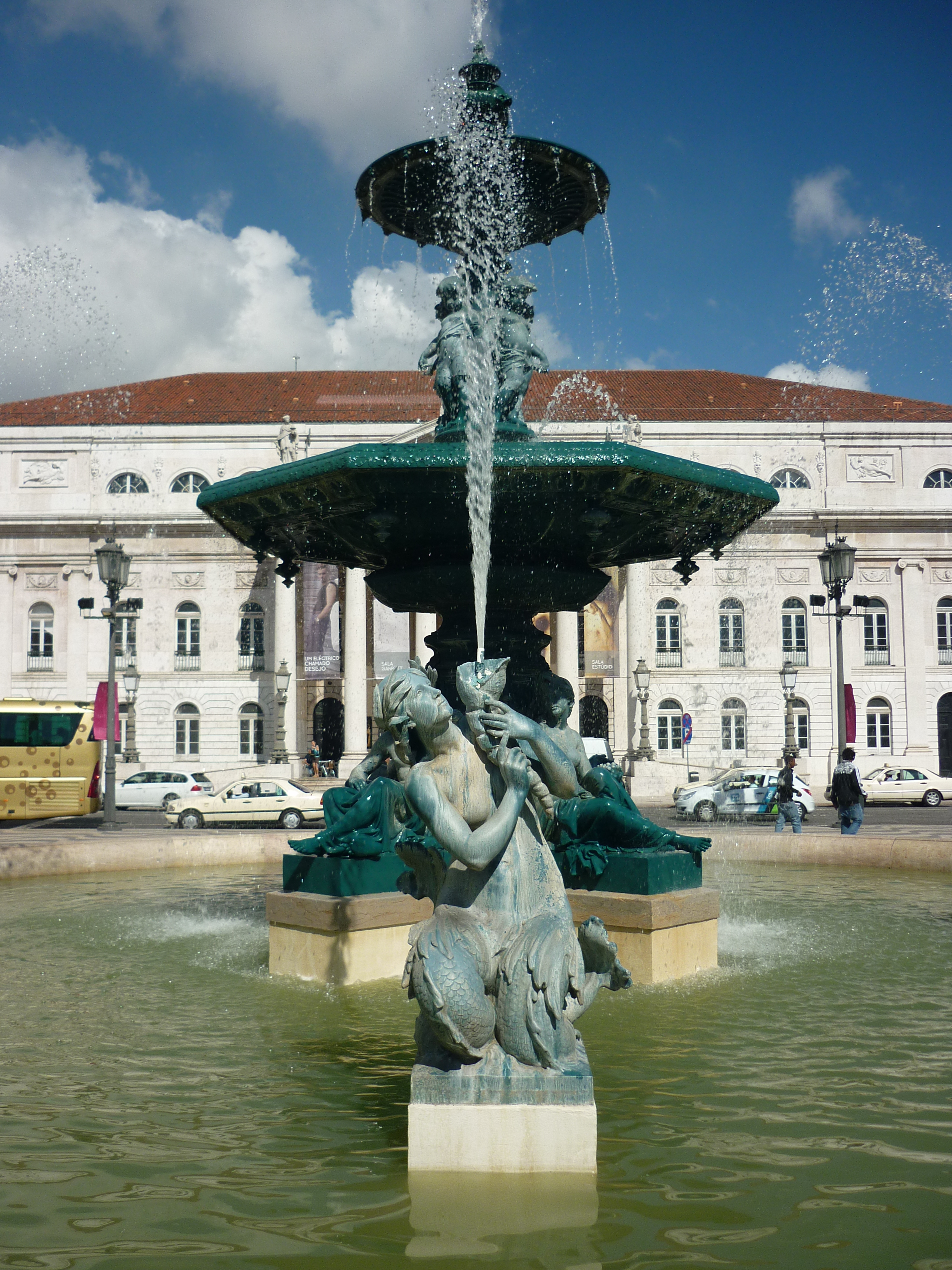
Fountain In Don Pedro IV Square

Rua Augusta Arch

Farol da Guia Light House , Lisbon
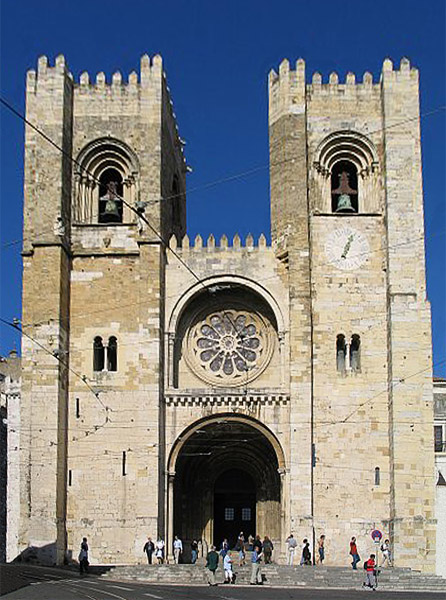
Se De Lisboa Frente
The Moorish influence is still present in Alfama, the old part of Lisbon that survived the 1755 Lisbon earthquake. Many placenames are derived from Arabic; the Alfama, the oldest existing district of Lisbon, for example, is derived from the Arabic "al-hamma".
For a brief time during the Taifa period, Lisbon was the centre town in the Regulo Eslavo of the Taifa of Badajoz, and then as an independent Taifa ruled by Abd al-Aziz ibn Sabur and Abd al-Malik ibn Sabur sons of Sabur al-Jatib (Sabur the Slav), a Slav that had been at the service of al-Hakam II before ruling the Taifa of Badajoz.
In 1147, as part of the Reconquista, crusader knights led by Afonso I of Portugal, besieged and reconquered Lisbon. The city, with around 154,000 residents at the time, returned to Christian rule.The reconquest of Portugal and re-establishment of Christianity is one of the most significant events in Lisbon's history; although it is known through the chronicle Expugnatione Lyxbonensi, attributed to Osburnus, that there was a bishop in the town that was killed by the crusaders and that the population was praying to the Virgin Mary when afflicted with plague, which indicates that the Mozarab population followed the Mozarabic rite.
Arabic lost its place in everyday life. Any remaining Muslim population were converted to Roman Catholicism by force, or expelled, and the mosques were turned into churches.


No comments:
Post a Comment